
18th April, 2026-On 18 April 2026, the celebration of Rongali Bihu started in the morning at 10 a.m. at Don Bosco College, Golaghat. The programme was conducted in collaboration with the Cultural club of the college. The main objective of the Bihu celebration was to celebrate the cultural heritage of Assam and to educate the students about the Assamese tradition. MitaliMushary, a student from English department hosted the programme. With the warm weather, the celebration started with a short Assamese poem followed by a heartfelt welcome speech by Fr. Principal. Dr. A. Amaladoss, which was followed by a respectful tribute to the music legend Zubeen Garg, acknowledging his monumental contribution to modern Assamese music and culture.
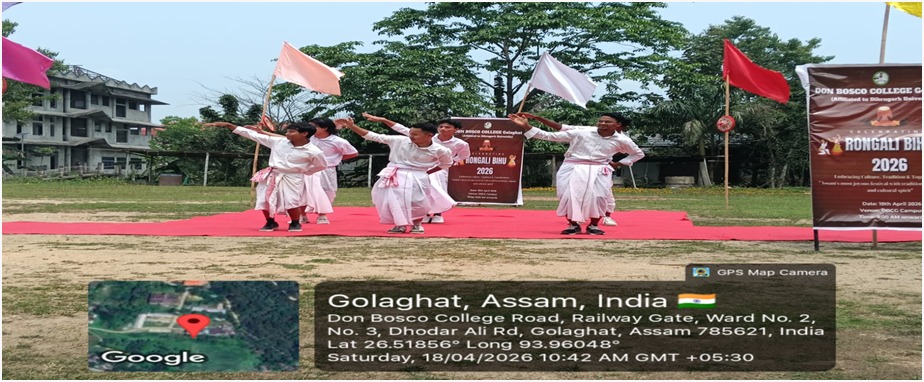
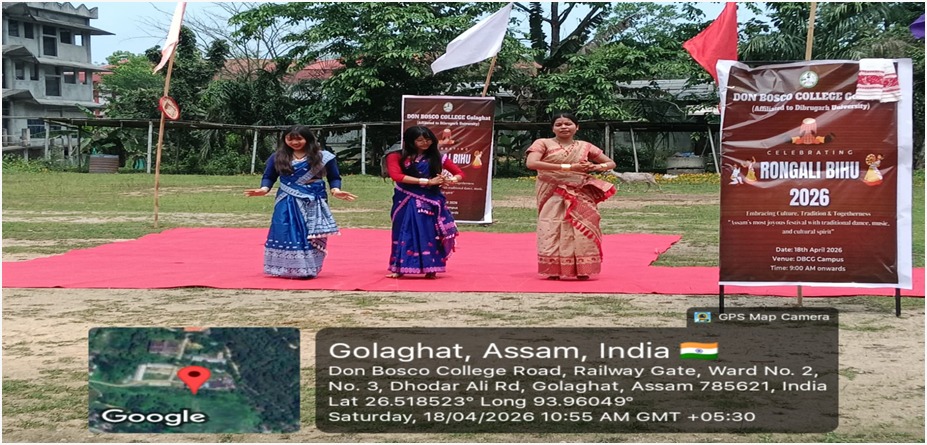
Then the celebration moved towards the cultural segment of the program featured a diverse array of performances by both faculty and students. Sir Mohit Urang opened the cultural set with a soulful song, followed later in the program by Ma’am Mrigakhi Goswami, whose melodious performance was highly appreciated by the audience. Ma’am GauraviRajkhowa delivered a speech on the significance of Rongali Bihu, providing the students with a deeper understanding of the traditions and cultural heritage of Assam. The energy of the youth was on full display through two major group dances. Mukrang Bey & Co. delivered a high-energy performance characterized by excellent coordination, while Urmila Tigga & Co. concluded the stage performances with a vibrant traditional dance featuring students in authentic Assamese attire. The formal stage program concluded with a vote of thanks delivered by Sir Sandeep Paul Topnowho expressed gratitude to the organizers, performers, and the administration for making the event a success.
Following the stage events, the celebration transitioned to the college field for traditional Bihu games, coordinated by Sir Gaurav Dey. The event concluded with a special invitation for all students and guests to share Jol Paan, which was thoughtfully prepared by the faculty members to foster a spirit of togetherness and festive joy.
Outcome:
1. Promoting social harmony and strengthening community bonding.
2. Celebrating the vibrant culture of Assamese society.
3. Fostering unity and building togetherness.
4. Developing creative skills through team effort, stage performance.
5. Learning about Assamese cultural traditions and customs.
6. Learning through cross-cultural encounters.